July Project Status Update: A Record-Breaking Mission and A Historic Groundbreaking
Some months, the work of bringing clean water to rural Peru happens in government offices, engineering meetings, and public records databases. July was different. This month, 28 VAVV missionaries — our largest team ever — landed in Piura, rolled up their sleeves, and became part of the story. They broke ground on a clean water system years in the making. They walked alongside engineers through communities that had never had a professional assessment of their water future. They delivered hope — tangible, immediate, and lasting — to families living without clean water. And then, many of them continued into one of the most spiritually rich pilgrimages VAVV has ever offered. July was, by almost every measure, the most significant month in VAVV's history. Here is what happened.
The 2026 Mission Trip: Records Broken, Ground Broken, Lives Changed
When 28 missionaries — including VAVV's three staff members and Hans Ingold, our mission trip coordinator now in his second year — arrived in Piura this July, they came as the largest team VAVV has ever sent. What they accomplished together matched the scale of that team in every way.
The headline moment came on July 29 and 30, when missionaries and community members stood side by side in Las Mercedes KM11 and broke ground on the final phase of construction for the community's long-awaited clean water system. This was not a ceremonial shovel in the dirt. This was the beginning of the end of a years-long journey — foundations for the reservoir and kiosk taking physical shape, built in part by the hands of people who flew from the USA to make it real. For the community members who have been meeting weekly, filing paperwork, and waiting faithfully, seeing missionaries show up with tools and work alongside them was something words don't fully capture.
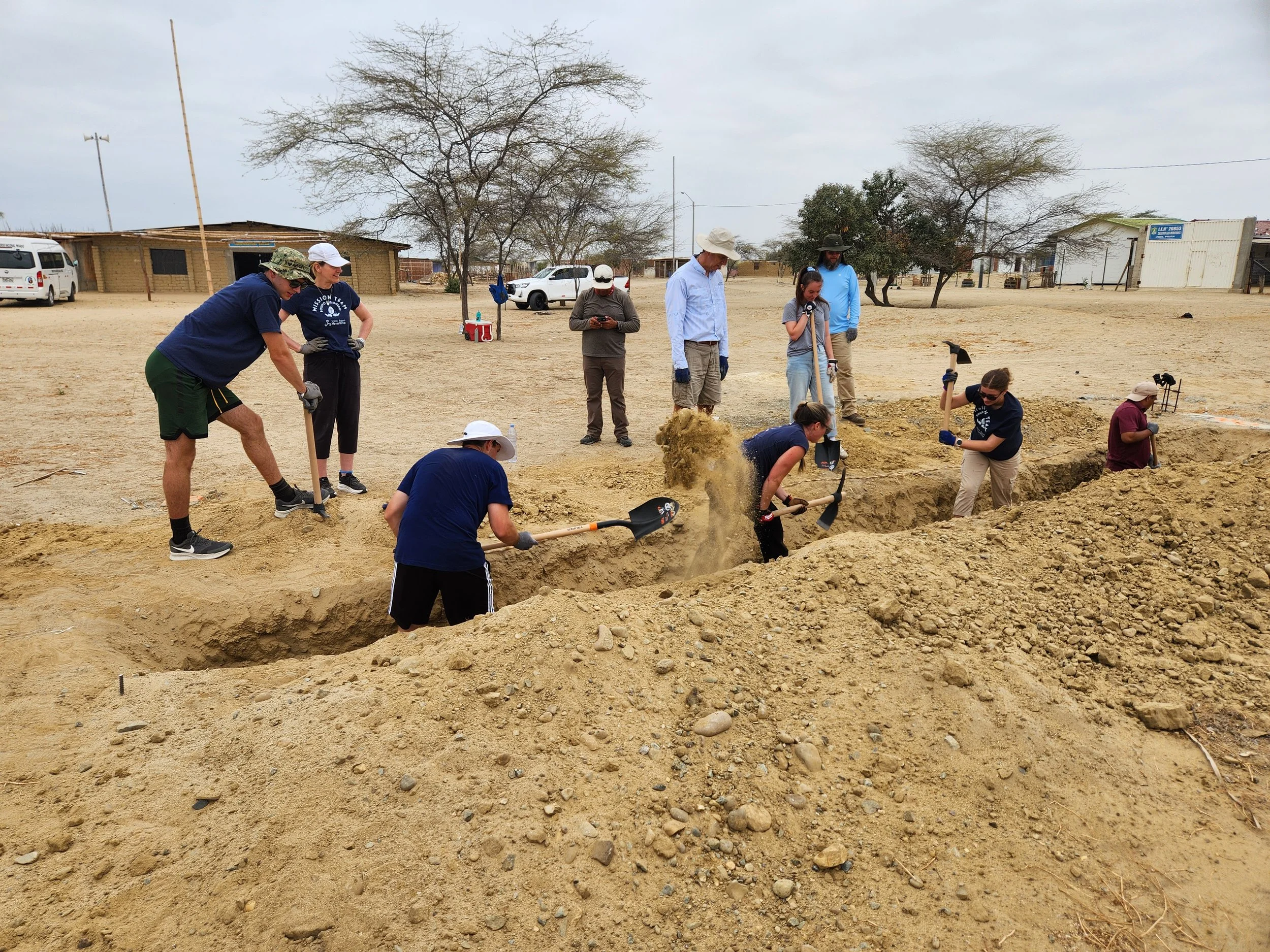
Missionaries breaking ground on July 29 on the staked construction site at Las Mercedes KM 11 (Piura, Peru, July, 2026).
That same team included VAVV's largest professional engineering contingent ever — eight engineers who worked directly in Totoral Bajo and Las Mercedes alongside community members, local leaders, and government agencies to advance planning, design, and site assessment in ways that simply wouldn't have been possible without them. In Totoral Bajo, those engineers joined forces with representatives from the National Water Authority and the Regional Government of Piura to conduct a comprehensive field visit of all six community sectors — resolving complexity that had stalled the project's technical direction and identifying the locations for the a possible source water uptake structure and main reservoir. In Las Mercedes, the engineering team deepened the groundwater well design work already underway, bringing professional expertise directly to a community whose water future is now being actively engineered. More on both in the project sections below.
The mission team also delivered on VAVV's education mission in a way we have never been able to before. This trip, two full WASH (Water, Sanitation, and Hygiene) and TOB (Theology of the Body) education workshops were implemented — one in each community — doubling what a single VAVV mission trip has ever accomplished. The workshop in Las Mercedes was led by Mahira Tehany Vasquez Saavedra, a long-time VAVV supporter, professional advocate, and local community liason volunteer whose commitment to this mission has grown into genuine leadership. The workshop in Totoral Bajo was led by Ricardo Arbulu Guerra, VAVV's own Projects and Programs Director, whose dual role as both a leader and educator is central to how VAVV approaches sustainable community development. Each workshop is an intensive, relationship-based process that doesn't just teach better sanitation and hygiene habits — it reframes how a community understands its own dignity and its right to basic needs like clean water all while enrichng their spiritual lives with an encounter with the Living Water of Jesus Christ.
Across those same two communities, the team distributed 1,200 care packages to individuals and families living without clean water — by far the largest number VAVV has ever delivered in a single trip. In Totoral Bajo and Las Mercedes, families received immediate, tangible relief even as the longer-term work of building their water systems continues. That number is the result of two things converging: a record-breaking team on the ground in Peru, and the remarkable growth of VAVV's care package program here at home in Dallas-Fort Worth. Every package represents a family whose immediate need was seen, acknowledged, and met.
But more than any statistic, what July gave our missionaries was encounter. In community after community, they met people living under the real, daily weight of life without clean water — and found them not defeated, but resilient. Not broken, but full of the dignity that comes from knowing they are children of God and our brothers and sisters in Christ. Our missionaries came to give. They came home changed. That exchange — that mutual transformation — is at the heart of why VAVV does mission trips.
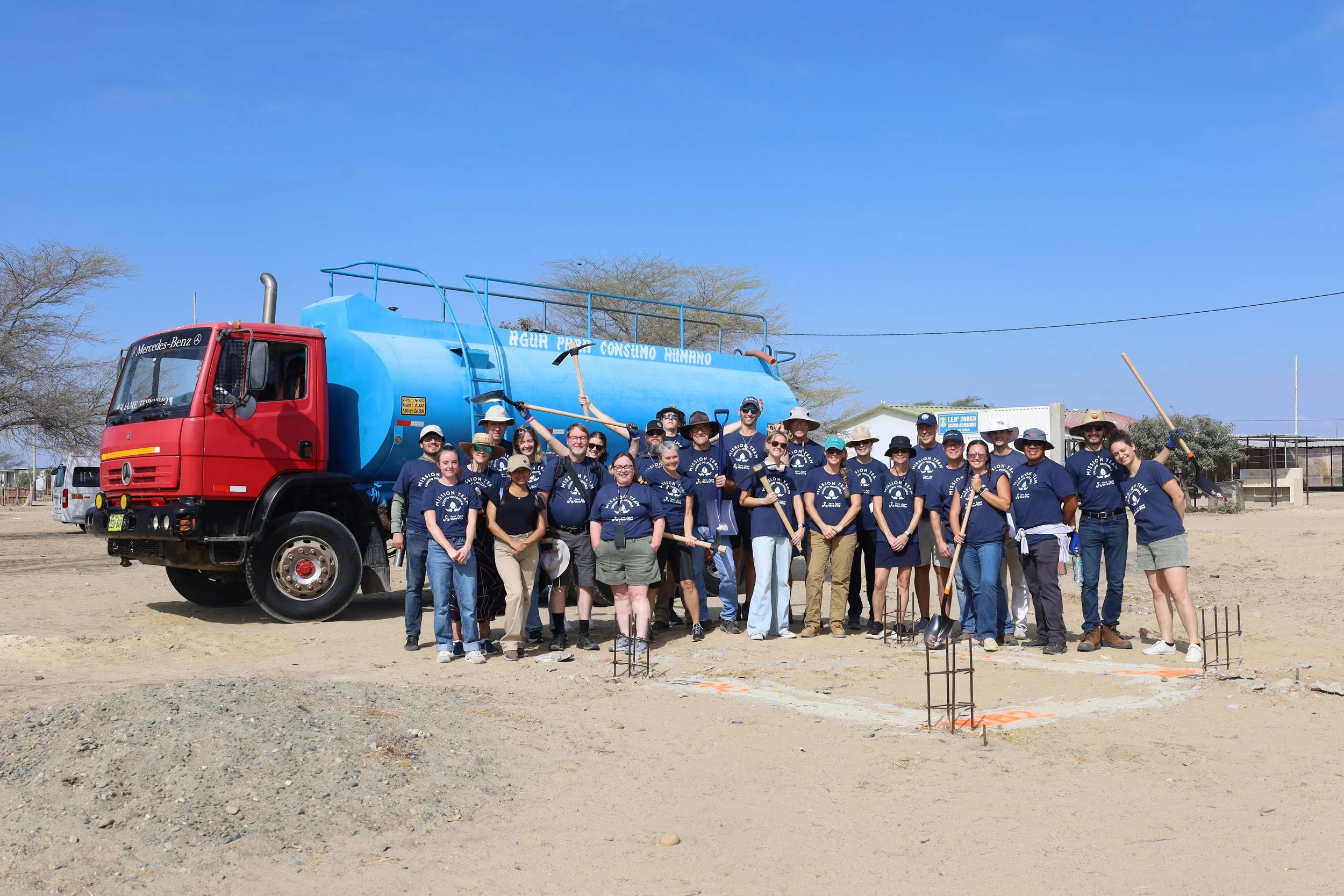
Before breaking ground on the construction for new clean water distribution system infrastructure, missionaries posed with the community of Las Mercedes KM11’s clean water distribution truck that VAVV purchased for the them last year (Piura, Peru, July, 2026).
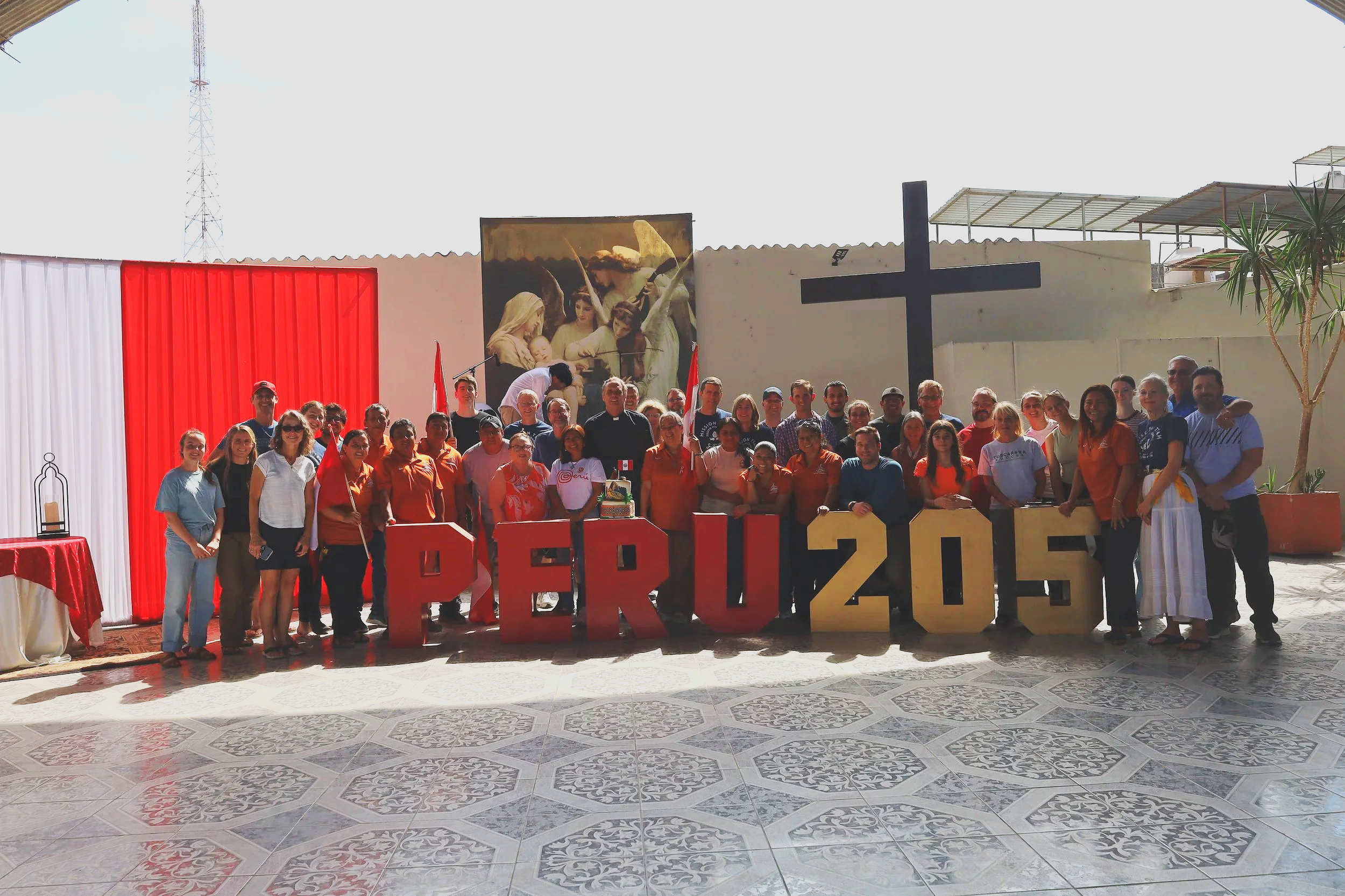
Vera Aqua Vera Vita’s Missionaries and Santisimo Sacramento staff members pose for a picture celebrating 205 years of Peruvian Independence (Piura, Peru, Aug. 2026).
The Pilgrimage: Walking Where Pope Leo Walked
For many on the team, the mission trip was followed immediately by an experience of an entirely different kind: a Catholic pilgrimage through Peru that went deeper than any itinerary could have predicted. Pilgrims had the extraordinary privilege of walking the very streets, visiting the places, and entering the spaces where former Bishop Robert Prevost — now Pope Leo XIV — lived, ate, prayed, and walked before ascending to the papacy. To stand in those places, knowing what they mean to the Church, was a moment of rare historical and spiritual weight.
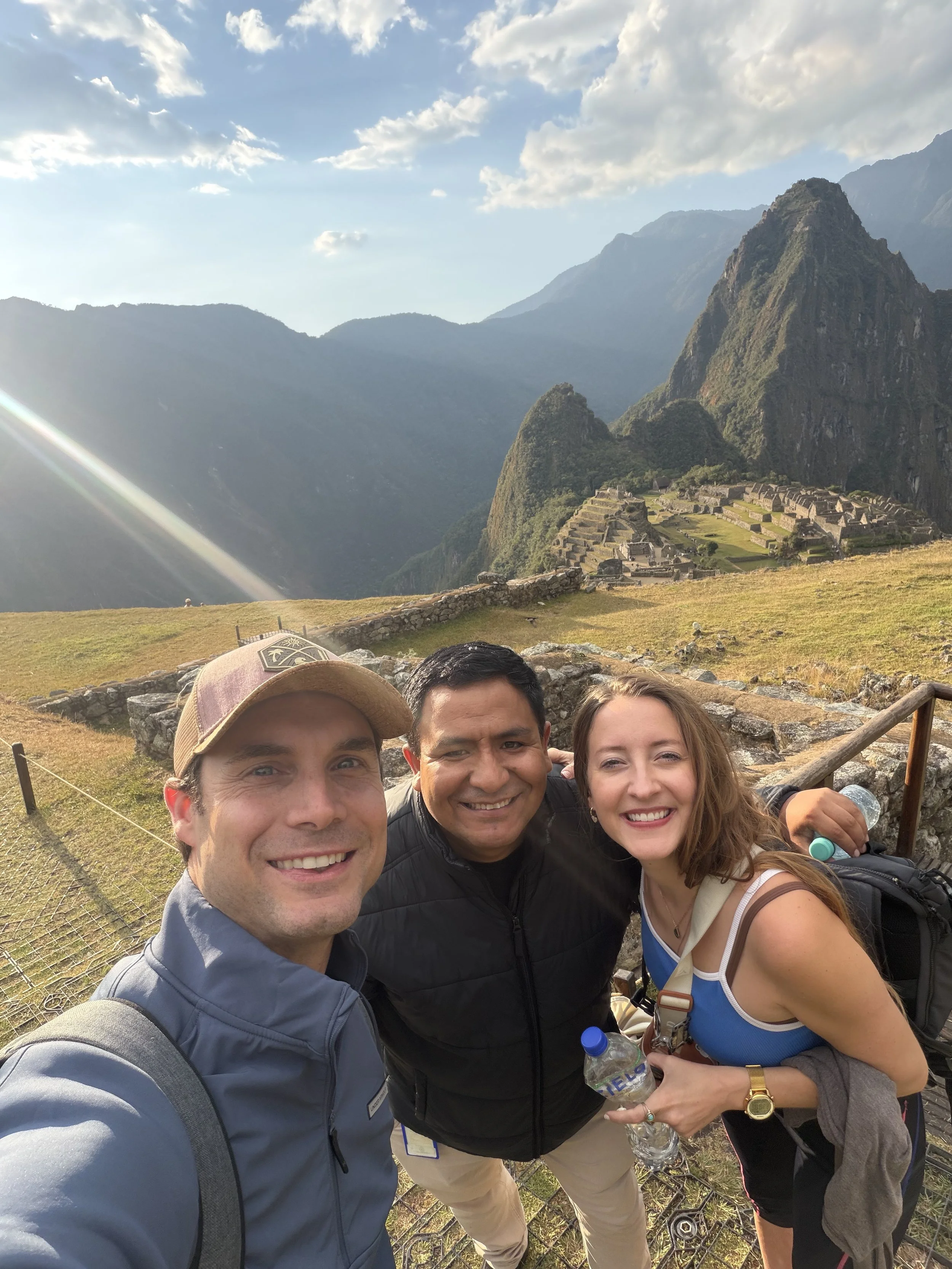
Evan Lemoine, spiritual formation leader for the pilgrimage, Maximo, pilgrimage guide, and Michaela Barta, pilgrimage coordinator, pose for a picture at Machu Picchu Mountain, Peru (Aug, 2026).
The pilgrimage also took the group to Machu Picchu, through the lives of Peru's saints, into its centuries-old cathedrals, and to miraculous sites that bear witness to the depth and beauty of the Catholic faith in this country. Peru is not just a place where VAVV works — it is a land of profound spiritual heritage, and this pilgrimage invited our missionaries to receive that heritage as a gift. Many described it as the most spiritually enriching experience of their lives.
Together, the mission trip and pilgrimage formed something whole: service and contemplation, giving and receiving, encounter with neighbor and encounter with God.
Las Mercedes KM11 (approx. 1,200 people) — ON TRACK
Ground Broken. Contractor Coming. Construction Is Underway.
July was the month Las Mercedes KM11 has been building toward for years. After the staking process was completed on July 27 — marking the exact locations of the reservoir, kiosk, and construction boundaries — missionaries and community members broke ground on the foundations of both structures on July 29 and 30. The work is no longer planned. It has begun.
Throughout the month, VAVV and the Regional Government of Piura continued clarifying architectural details and resolving technical questions on the design. The Water Committee held its weekly meetings with VAVV, sharpening operations, maintenance, and financial management procedures. And during the mission trip itself, VAVV met in person with the Municipality of Piura to work through the final outstanding requirements for the JASS — the community's Water and Sanitation Service Management Committee — to receive its official recognition.
On July 30, VAVV and the Regional Government of Piura had a comprehensive meeting covering the full scope of the construction process and broader discussion of future projects — a conversation made possible by the momentum.
Looking ahead
In the weeks ahead in August, the JASS will receive its official Municipal Recognition Resolution and complete registration in Public Records, securing the community's legal authority to own and operate their system. VAVV and the Regional Government will meet with the selected contractor for the pre-construction meeting, and the contractor will be formally hired to commence construction — with continued sweat equity support from the community. A GPS and alarm system for the Water Tanker Truck is planned to be purchased by the end of August. The foundation has been laid — in every sense!
Las Mercedes (approx. 700 people) — ON TRACK
Engineering Deepens and a Land Rights Meeting Opens a New Path
July was a full month for Las Mercedes on multiple fronts. On July 10, VAVV hosted the second engineering design meeting for the groundwater well and associated infrastructure, fully supported by the Project Management System and Autodesk Cloud platform established earlier in the month. Engineering meetings continued throughout July as the well design took meaningful shape.
On July 24, VAVV, village leaders, and the Regional Government met with PECHP — the regional hydraulic and irrigation authority — to discuss how to formally amend the public deed and transfer land rights to the community over the land designated for the well and kiosk. This is an important legal step: getting the right land into the right hands so that the infrastructure built on it belongs to the community permanently.
During the mission trip, VAVV's eight-person engineering team worked directly in Las Mercedes, advancing the well design alongside community members. Mahira Tehany Vasquez also led a full WASH and Theology of the Body education workshop with the community — an intensive, hands-on session that deepens community understanding of water, sanitation, hygiene, and honors the dignity of every person. Care packages were distributed to families across the community, providing immediate relief alongside the longer-term plans of infrastructure to be built in the coming months.
Looking ahead
Throughout August, VAVV will continue engineering meetings for the planning and design of the groundwater well and infrastructure. In the third week of August, the community will work to secure the formal issuance of easements and land rights for all additional areas required for the project. The well is being designed carefully and correctly — because it needs to last generations.
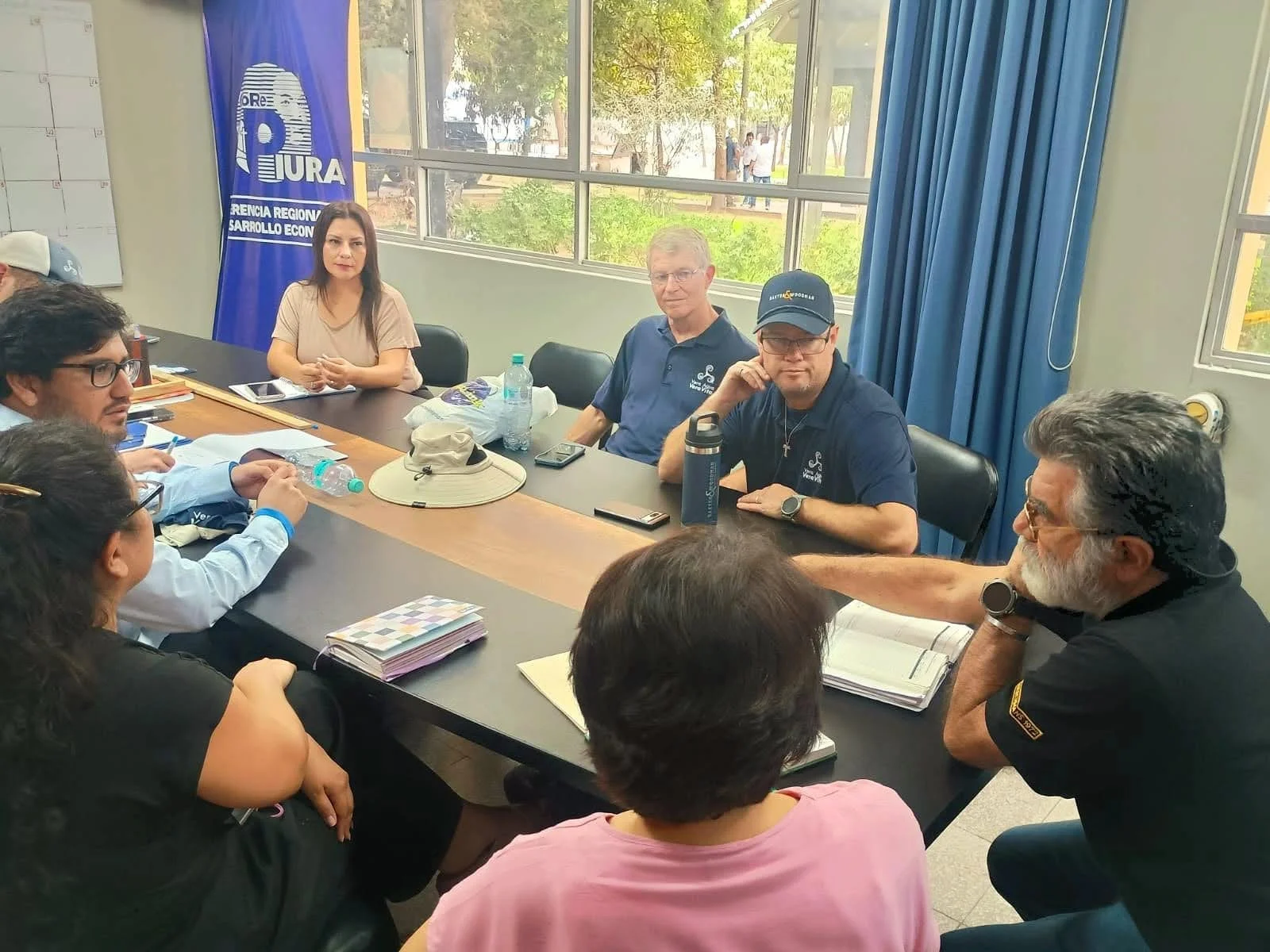
A part of VAVV’s missionary engineering team and community leaders met with the Piura Regional Government on July 30 (Piura, Peru, July, 2026
Totoral Bajo (approx. 800 people) — ON TRACK
A Multi-Agency Site Visit Solves begins to clarify the situation — and Points the Way Forward
July delivered Totoral Bajo's most consequential month yet — and the mission trip was at the center of it. On July 31 and August 1, engineers from three organizations — the National Water Authority (ANA), the Regional Government of Piura (GRP), and private engineering firms — traveled to Totoral Bajo alongside VAVV missionaries and surveyors for a comprehensive, multi-agency field visit of all six of the community's distinct sectors. VAVV's own eight-person engineering team was present and actively working throughout.
What they resolved together on the ground was significant: every complexity issue that had made it difficult to determine the right technical approach for this community was worked through. The best project solution for the village was determined. A propose location for the water source uptake structure was idenitified. The approximate location for the main storage tank was identified. Missionaries helped with the assessment work directly alongside engineers — a collaboration that embodied what VAVV's model of relational, community-centered development looks like in practice.
Alongside the engineering work, Ricardo Arbulu Guerra led a full WASH and Theology of the Body education workshop for the Totoral Bajo community, and care packages were distributed to families across the community's six sectors, bringing immediate relief to households living without clean water and improved sanitation while their future system takes shape.
In a single month, Totoral Bajo moved from patient data collection into technical definition, community education, and tangible care. That is a genuine leap forward.
Looking ahead
In the third week of August, VAVV plans to complete the topographic survey. In the fourth week of August, VAVV hopes to submit the Technical Record to the Local Water Authority to obtain water rights over the selected source location — a critical permitting step that unlocks the next phase of engineering. The community will support VAVV in preparing that technical record throughout the month. Totoral Bajo is no longer the youngest project finding its footing. It is a project with a direction.
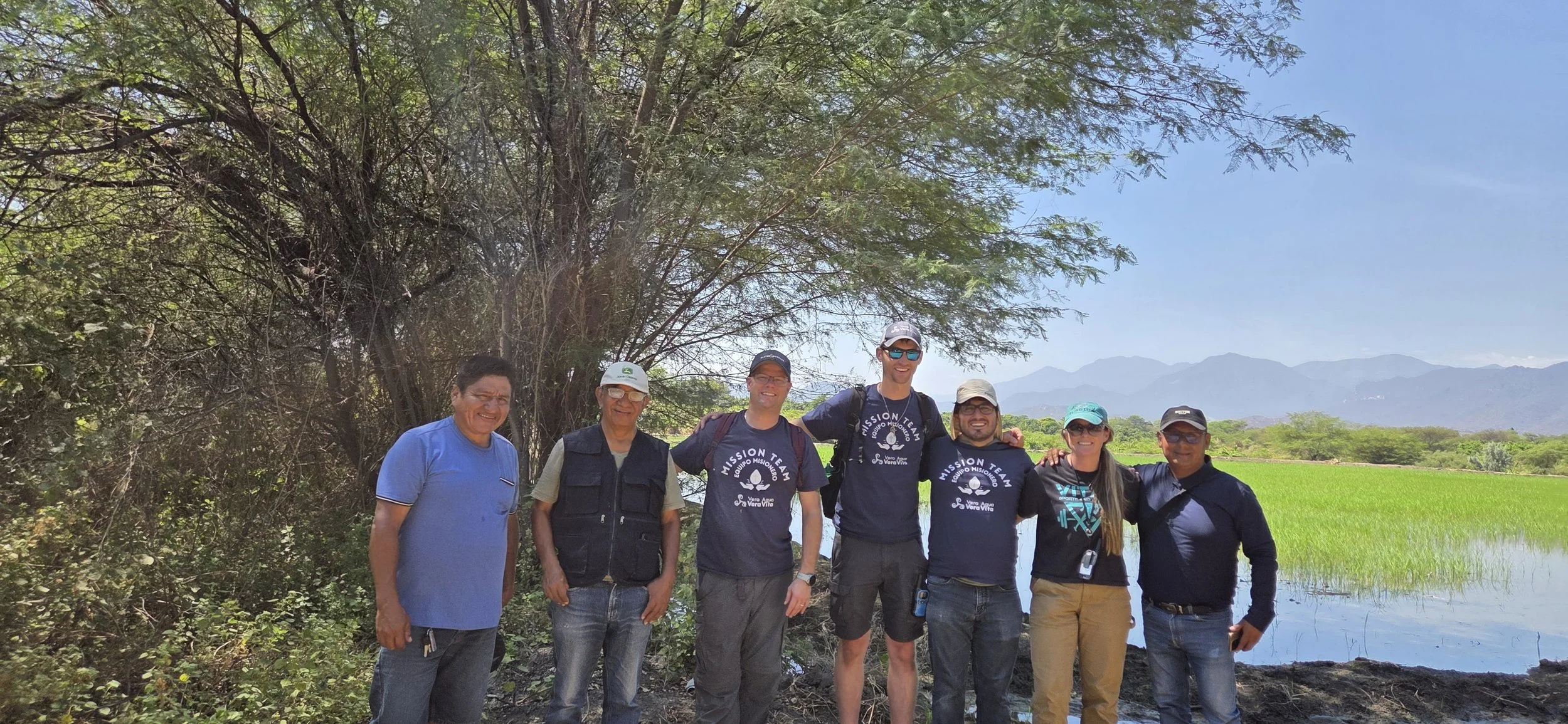
A part of the Missionary engineering team meeting with local community leaders to discuss water access and proposed solutions (Totoral Bajo, Piura, Peru, July, 2026).
A Word on La Merced
La Merced remains paused while the community works through a complex land rights situation that is outside VAVV's direct control. We remain in relationship with the community and will continue to support their navigation of this process. In the meantime, VAVV's energy and resources are directed toward the communities where a clear legal path forward exists — and as July demonstrated, that path is producing real results. When La Merced's way forward becomes clear, we will be ready.
Looking to the Future
July set a new standard for what VAVV is capable of — 28 missionaries, eight of them engineers, two WASH + TOB workshops, 1,200 care packages delivered, one contruction groundbreaking, and a pilgrimage that left people changed at the level of the soul. That is not a coincidence. It is the result of years of building relationships, developing systems, and trusting that faithful, patient work compounds and is rewarded over time.
The system under construction in Las Mercedes KM11 this July will provide reliable and sustainable clean water distribution for a community that has waited long enough. The engineering meetings in Las Mercedes are designing a well that will serve 700 people for generations. The engineers who stood in Totoral Bajo's fields and made decisions that no map could make for them have given that community a future it couldn't see before July.
This is what your support makes possible. If you want to be part of what comes next, there is always room!