Catholic Non-Profit Fulfilling Pope’s Vision to Conserve Water and Provide Education to Vulnerable Communities
Pope Leo XIV’s recent call for better stewardship of water is already lived out robustly by a Catholic non-profit called Vera Aqua Vera Vita (VAVV), which supplies clean water to communities in need and educates them on how to care for this crucial resource, thus securing the future of vulnerable populations throughout the world.
“Lord of life, you have given us the gift of water, source of fruitfulness, freshness, and hope,“ said Pope Leo XIV in a video announcing his prayer intentions for September 2026, which was “for the care of water.”
“We see with pain so many brothers and sisters who lack clean water, who walk for miles to find it, who become ill due to its scarcity,” he added.
This September’s prayer intention of the pope aligns with the Laudato Si Season of Creation, an annual celebration running from September 1 to October 4, the Feast of Saint Francis of Assisi. The Season of Creation is a period during which Christians celebrate the goodness of God’s creation while praying for and committing to the preservation of that gift in response to modern ecological threats. First established when Ecumenical Patriarch Dimitrios I proclaimed September 1 as a day of prayer for creation in the Orthodox Church in 1989, the season was later adopted by the Roman Catholic Church under Pope Francis in 2019.
This year, Pope Leo wishes to draw special attention to the importance of water, both as a key ecological and human resource and as a spiritual symbol. “It quenches thirst, nourishes the earth, and heals wounds,” he noted. “We thank you because it is also a symbol of Your grace and love that renews us through baptism. Today we ask you to teach us to safeguard it with gratitude, justice, and responsibility.”
Few organizations understand more profoundly the importance of the pope’s words than Vera Aqua Vera Vita (VAVV), a nonprofit dedicated to providing clean, sustainable water solutions and education to communities in need.
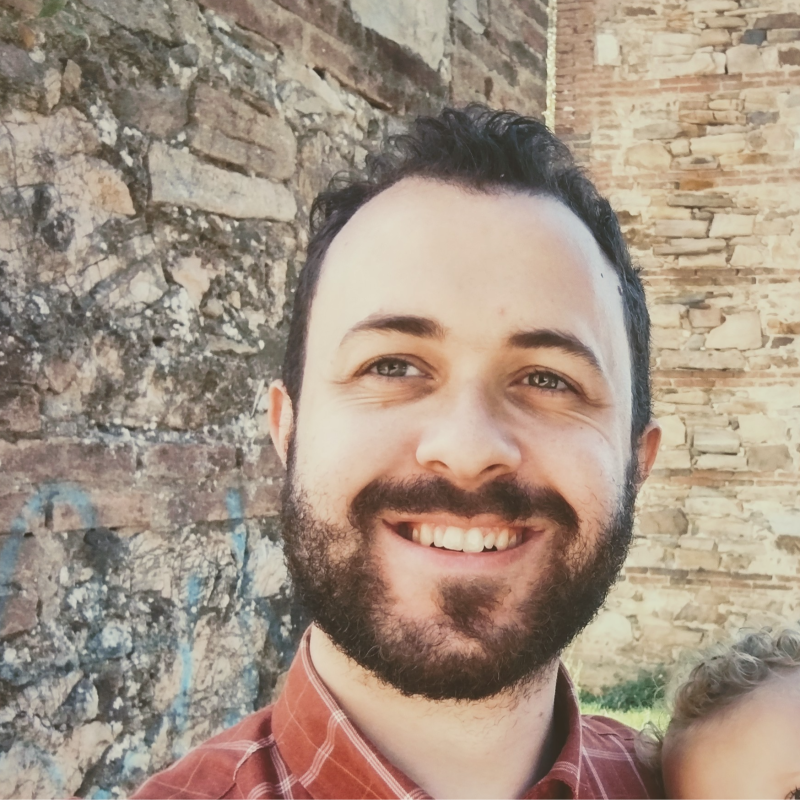
Jacob Niemeier, the organization’s founder and executive director, saw firsthand the catastrophic, life-draining effects of clean water scarcity during a mission trip to Haiti in 2011. “I was overwhelmed by the severity of poverty,” Jacob recalled. “There was a woman that walked from her tent carrying a bucket to the canal that was flowing through the city and filled up her bucket with water that looked like chocolate milk. The canal had animals defecating and walking around it, was visibly full of trash and litter, and had people washing their clothes and dumping their waste into it.”
What Jacob witnessed is hardly an isolated incident; at least 2 billion people around the world are forced to use contaminated drinking water, placing them at risk for diseases such as cholera, dysentery, typhoid, and polio. This crisis of clean water access leads to at least a million preventable deaths each year, the loss of 443 million school days in developing countries, and $260 billion due to insufficient water supply and sanitation systems.
After he graduated from Purdue University in 2012, Niemeier began work as a water resources engineering consultant in Dallas, Texas, which prepared him to assist on a project to secure clean water for members of the pueblo of Monte Castillo in the Piuran region of Peru. This resulted in a pilot project that delivers safe, clean water to more than 7,000 people, marking the beginning of Vera Aqua Vera Vita.
The Monte Castillo project, which involved both primary water source and wastewater disposal systems, reduced chronic waterborne illness in the community from 84% to 0%. 100% of the residents reported that the water treatment facility positively impacted them and their families. Prior to VAVV’s work, 86% of residents had to travel to remote sources of water, and only 30% treated their water before using or consuming it. After VAVV’s project, 100% of residents have access to clean water close by, and water treatment rose to 90%. This has led to downstream improvements like greater educational opportunities for the children in the community and enhanced work productivity for adults.
On this foundation of success, VAVV has launched four more projects across rural communities in Peru — Las Mercedes KM11, La Merced, Totoral Bajo, and Tierra Prometida — bringing the same model of clean, clear, life-giving water and wastewater infrastructure to empower the residents.
But VAVV does much more than merely establish clean, safe water and sanitation systems. They understand the importance of the educational component of the Pope’s message: “May our care for water be a sign of love for the Creator and a commitment to the lives of the poor, educating new generations to value and protect the earth's resources.”
This is why VAVV’s programs involve intensive water, sanitation, and hygiene community education. VAVV aims to equip local populations with not only immediate water relief but also the long-term knowledge and toolkit to manage and preserve local water sources for decades, so that the benefits of the work can continue to flow out and inundate future generations.
These educational programs involve teaching households how to store and filter water using common household items, introducing techniques such as solar water disinfection, and highlighting real examples of water and wastewater practices that support rather than threaten community health. In addition, educational workshops incorporate the Theology of the Body to instill a sense of the dignity and worth of every human being, which forms the ultimate motivation for the work as a whole–and the importance of stewardship.
VAVV’s guiding principle is the old proverb, “give a man a fish, and you feed him for a day; teach him to fish, and you feed him for a lifetime.” If the group only installs infrastructure, there’s a risk that it will fail after they leave the location. But by providing a scaffolding of education alongside the physical solutions, this ensures long-lasting success. As Niemeier put it, “Our goal is for every community we serve to become the stewards — the ‘aqueducts’ — of their own water future for generations to come, not to stay dependent on us.”
All of this life-transforming work requires the generous sacrifice of time on the part of volunteers and funds on the part of donors. The Monte Castillo project, for instance, cost just over $100,000. Educational programs cost less, but still require capital outlays. The group hopes to reach 12,000 people over the next 2 years with their educational materials, but this will cost $50,000 to train instructors and create resources.
VAVV runs primarily on the generosity of individual donors, as well as a handful of corporate partnerships and grants. A donation of just $50 allows VAVV to bring clean water to one person for generations to come.
“That's the heart of our model,” Niemeier said. “We're not funding a one-time delivery; we're funding infrastructure and education built to outlast us, so a single gift keeps serving that person, their children, and their community for years after the check clears.” (You can support the life-saving work of VAVV here: https://veraaquaveravita.org/donate.)
VAVV draws inspiration from the life and work of St. Pier Giorgio Frassati, recently canonized by Pope Leo XIV in September of 2025, a handsome, energetic young Italian man who devoted his boundless energy to the service of those who were less fortunate than himself. Weaving in and out of the streets of his native Turin, he would visit the sick and the poor, supporting them with his cheerful smile, strong arms, and open pocketbook. He studied engineering in order to work in the mining industry, hoping thereby to continue his apostolate of charity among the poor mining families. However, he contracted polio–likely from his constant contact with the poor–and died in 1925, just prior to graduation, at the age of 24.
Niemeier commented, “Pier Giorgio Frassati was himself an engineering student, just weeks from his degree when he died in 1925 — so there's a real kinship there for our team. He paired deep faith with hands-on service to the poor, and that's exactly the model we've tried to build VAVV around.”